
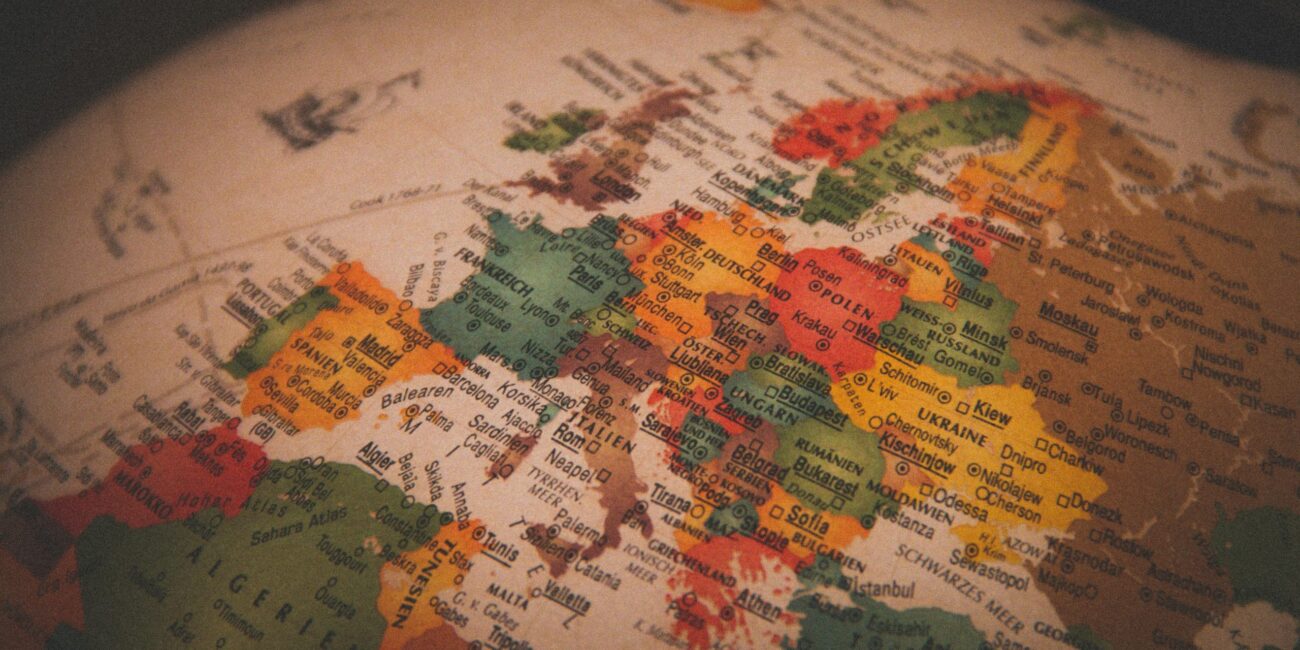
Governments across Europe are hiking gambling taxes, chasing short-term revenue. Martin Bjoerck considers the reasoning behind these political decisions and what long-term ramifications could look like.
In a time of strained public budgets and slow economic growth, European policymakers are increasingly turning to the online gambling industry as a source of fast, visible tax revenue.
Across European markets, governments are imposing or proposing steep gambling tax hikes on operators, many of which last year contributed €3.8 billion in taxes to the European economy as a whole, according to the European Gaming & Betting Association (EGBA).
In most cases, policymakers have said they are turning to the sector to help plug budgetary holes. And gambling is a seemingly easy target for governments that can play into the public health argument against the industry.
“Gambling has traditionally been viewed as a good source of relatively painless government revenue. Tax policies in European countries are also increasingly focusing on excise taxation, particularly environmental and public health excise duties, to raise much-needed public revenue,” explains Virve Marionneau, associate professor and tax expert, as well as director of the Centre for Research on Addictions, Control and Governance at Helsinki University.
However, the returns from these gambling tax policies are uncertain and are likely to negatively affect the broader sector. So, what lies behind the political decision-making?
Netherlands gambling tax hike impact already being felt
Let’s first take a look at what’s going on in the Netherlands. Lawmakers there approved a sharp increase in gambling tax, from 30.5% to 34.2% of GGR, starting in January 2025, with a further rise to 37.8% in 2026.
The Dutch Treasury had expected an additional €200 million in tax revenue annually, but figures from the licensed Dutch online gambling providers, represented by VNLOK, suggest that GGR in the first half of 2025 will be down 25% compared to the previous year, resulting in a shortfall of €200 million.
Both VNLOK and the Dutch regulator KSA have expressed concern about the government’s plan for a further tax increase.
When taxes increase on gambling operators, they often pass additional costs on to their customers. This could manifest in higher betting odds, higher fees or less attractive bonuses and promotions. As a result, players may turn to the more lucrative but also riskier unlicensed market.
“The tax hike will have a negative impact on our market. Channelisation rates will decrease. We are worried about that, because we believe a strong legal market is key in combating illegal offerings,” Marloes Derks, spokesperson for KSA, tells iGB.
Despite this, the Dutch government has stated that its tax policy will not change, even though expected revenue is falling short of expectations.
In accordance with budgetary rules, windfalls and shortfalls in tax revenue are reflected in the balance after policy is adopted. Therefore, the revenue shortfall, from this perspective, is not seen as grounds for a compensatory policy, according to State Secretary for Taxation Eugène Heijnen, who addressed the Dutch parliament earlier this month.
A strategy doomed to fail
The Dutch tax hike has drawn attention from other markets.
“As I understand it, the message from Dutch politics is that they consider the concept of channelisation to be irrelevant. They simply ignore it in favour of various moral views on gambling. And then, of course, it becomes easy to raise taxes,” says Gustaf Hoffstedt, secretary general of BOS, the Swedish Trade Association for Online Gambling.
He observes a trend across Europe of tightening conditions for licensed gambling companies, with tax increases being just one example.
“An important component of that trend is the lack of interest in how such deteriorations affect the ability of licensed gambling companies to keep out unlicensed competitors,” Hoffstedt says.
In his home country of Sweden, the Ministry of Finance was expected to raise €50 million a year through an increase in tax from 18% to 22% on GGR, effective from July 2024. But Hoffstedt – who calls the political reasoning behind the tax hike “profit hunger” – believes those figures are more likely to be around €20 million-$40 million. And it will come at a cost, he adds.
“Reduced channelisation and around a thousand new gambling addicts as a result of the transition from licensed to unlicensed gambling,” he predicts.
Trend across Europe
Looking toward Eastern Europe and Tier 2 markets, Romania has imposed a 27% GGR tax on online operators from July 2025, up from 21%, and is also introducing higher licensing fees.
In the Czech Republic, the government increased the GGR tax for online betting, bingo and poker from 23% to 30% in 2024 to fund public spending.
In Slovakia, where activity in the online casino market rose by almost 30% year-on-year in 2024, Environment Minister Tomáš Taraba has called the gambling industry “profiteers of human misery”. The government has proposed raising the tax rate for online gambling to 30%.
Meanwhile, in Germany, every euro wagered on slot machines and poker faces a 5.3% levy. Because of this rule, up to 80% of online slot play now takes place with unlicensed operators, estimates the German Online Casino Association. German online casino tax revenue saw a decline of 16% in 2024 and, since 2022, there has been a 47% drop.
France is already one of Europe’s most expensive markets to operate in, but the government is planning to expand GGR taxation and charges. It aims to generate an additional €1.6 billion in gambling-related revenue.
“A few European jurisdictions like Malta and Estonia stand out with exceptionally low tax rates to attract onshore gambling operators. Other countries, like France, use high tax rates as a means to control entry to the market. The aim of French gambling policy has been to keep the number of licensees low,” says Marionneau, tax expert from Helsinki University.
UK gambling tax decision will affect the whole sector
And then there is the UK – Europe’s biggest market for online gambling – and for a long time, known in the industry as the voice of reason in Europe when it comes to a balanced approach to gambling regulation. However, for the industry, that perception may be about to change.
In April, the UK government proposed bringing the current three-level tax rate system for remote gambling under one consolidated rate.
The industry has expressed concerns over the changes, believing it could result in all gambling verticals facing a 21% duty.
Several voices are pushing for a much bigger tax increase on the gambling sector. Among them, former Prime Minister Gordon Brown and the Institute for Public Policy Research (IPPR). They argue that a tax increase on the sector should be used to help fight the rising child poverty in the UK.
IPPR has recommended increasing remote gaming duty from 21% to 50%, and machine games duty from 20% to 50% of operator profit. General betting duty would rise from 15% to 25%, estimating that this could generate around €1.5 billion.
The UK government is expected to present its plans in the 2025 autumn budget on 26 November.
UK government sending mixed signals
The UK’s Betting and Gaming Council has called the proposal “reckless” because it will drive players toward the unlicensed market, a claim that IPPR has chosen to dismiss.
“There appear to be three drivers here: the economy, policy and politics. HM Treasury keeps all taxes under review and we know that it has been looking at online gambling for a while. It may take the view that the online gambling market can sustain higher levels, which will be unresented by the population at large,” says Dan Waugh, partner at Regulus Partners.
The government is sending mixed signals regarding its attitude toward the gambling industry, and this has raised alarm bells, he says.
“The Department for Digital, Culture, Media and Sport (DCMS) adheres to the traditional view that gambling is a legitimate pastime that can involve negative health consequences. It therefore favours a balance of freedom and protection. The Department of Health and Social Care, on the other hand, perceives gambling as the ‘new tobacco’ and wishes to do various unspeakable things to it enroute to prohibition.
“Prudent operators will be looking at how they can mitigate the costs of any tax increases.”
Whatever happens in the UK will affect the entire market in Europe, says Hoffstedt.
“The UK, together with Denmark, has been able to show that it is possible to combine high channelisation with high consumer protection. If channelisation in the UK declines in the future, it will negatively affect all gambling markets in Europe.”
Hoffstedt hopes that governments will eventually recognise the negative consequences.
“In the end, it becomes obvious to everyone that a gambling market that lacks consumers – when they’ve gone to the unlicensed gambling market – lacks relevance and legitimacy. It is a strategy that is doomed to fail in every jurisdiction that uses it.”
More Information & Source
Original Source:
Visit Original Website
Read Full News:
Click Here to Read More
Have questions or feedback?
Contact Us

Other Articles
UK watchdog raps William Hill over “irresponsible” betting shop promotion
Games Global & Spin Gaming Open Brazil’s First Live Casino Studio
