Former New Jersey governor who backed legal sports betting says league is prioritising integrity over marketing revenue.
Chris Christie is acutely aware of the power of advertising during the Super Bowl.
Viewership for Super Bowl LIX last year peaked at 137.7 million Americans, making it the most-watched single-event programme in US television history. For Sunday’s game, the NFL has set a cap of six commercials for legal sportsbooks, a limit in line with prior years in the post-PASPA era. Charging an average of $8 million per 30-second spot, NBC will set a record for Super Bowl advertising costs.
One company that will not be airing a commercial is Kalshi, due at least in part to a league prohibition on prediction market ads.
As the former governor of New Jersey, Christie helped bring the Super Bowl to MetLife Stadium in 2014. Now a strategic advisor for the American Gaming Association, Christie is a leader in the trade group’s bruising fight against prediction market sites concerning the regulation of sports event contracts.
“The NFL is standing up for the regulated markets across this country that are protecting their fans,” Christie told iGB. “They are saying the integrity of our sport and the protection of our fans trumps any type of money that we can make from these commercials.”
The fight continues
This year’s Super Bowl will be held amid the rapid expansion of prediction markets, a sector weighed into by regulated sportsbooks, financial exchanges, fantasy sports platforms and crypto-based exchanges, all completing the launch of prediction sites in recent months. By the end of the decade, trading volume on prediction markets could hit $1 trillion, gaming research firm Eilers & Krejcik projects.
In an interview with iGB, Christie spoke about not only prediction markets but states’ rights and sports betting integrity in light of the convergence of several complex gambling scandals. Following the indictments of Portland Trail Blazers coach Chauncey Billups and two MLB pitchers, Christie indicated his belief that the detection of the schemes shows that the system is working.
Unlike some other North American sports leagues, the NFL has resisted forging any commercial partnership with a prediction market operator. Speaking at an event in December with Genius Sports, NFL Commissioner Roger Goodell said the NFL is not about to formalise such a partnership, explaining that the league would like to see how the issue progresses from a “regulatory standpoint”. Later that month, the NFL submitted written testimony to the US House Committee on Agriculture, which convened a hearing on federal oversight of prediction markets.
In addressing the asset class, the NFL noted concern that sports event contracts fall outside the purview of state regulatory authorities and the “safeguards they impose upon the industry”.
Under the NFL’s advertising policy for the Super Bowl, traditional sportsbooks such as DraftKings and FanDuel can air a commercial during the game. However, the policy restricts the companies from making reference to prediction markets in the ads. Both companies have launched prediction market platforms since late 2025.
Christie lauded Goodell for the restrictions, calling it a “smart” decision that he strongly supports.
Other highlights from the interview
- At issue in the prediction market battle is whether the regulation of sports event contracts should fall under the jurisdiction of the states or the federal government through the US Commodity Futures Trading Commission. New York Attorney General Letitia James this week issued a memo in which she accused prediction markets of operating as “unregulated gambling”. Christie told iGB that state attorneys general should be “aggressive in enforcing their rights” and bringing prediction markets to court.
- The former governor expressed concern with the susceptibility of some prediction markets to insider trading. The concerns arose after a trader reportedly made more than $400,000 on Polymarket from a contract pertaining to the ouster of former Venezuelan President Nicolas Maduro. Christie took exception with a separate contract that allowed users to trade on whether certain student-athletes will enter the transfer portal. “Imagine the opportunity for corruption in that type of situation,” he said. Kalshi has stated it has banned insider trading, while the coalition has vowed to uphold “legal, ethical standards across the industry” by ensuring that “market integrity” is maintained.
A return to the nation’s highest court?
At least eight states, including Christie’s home state of New Jersey, have filed cease-and-desist orders against Kalshi in attempts to prohibit the site from operating in their respective jurisdictions.
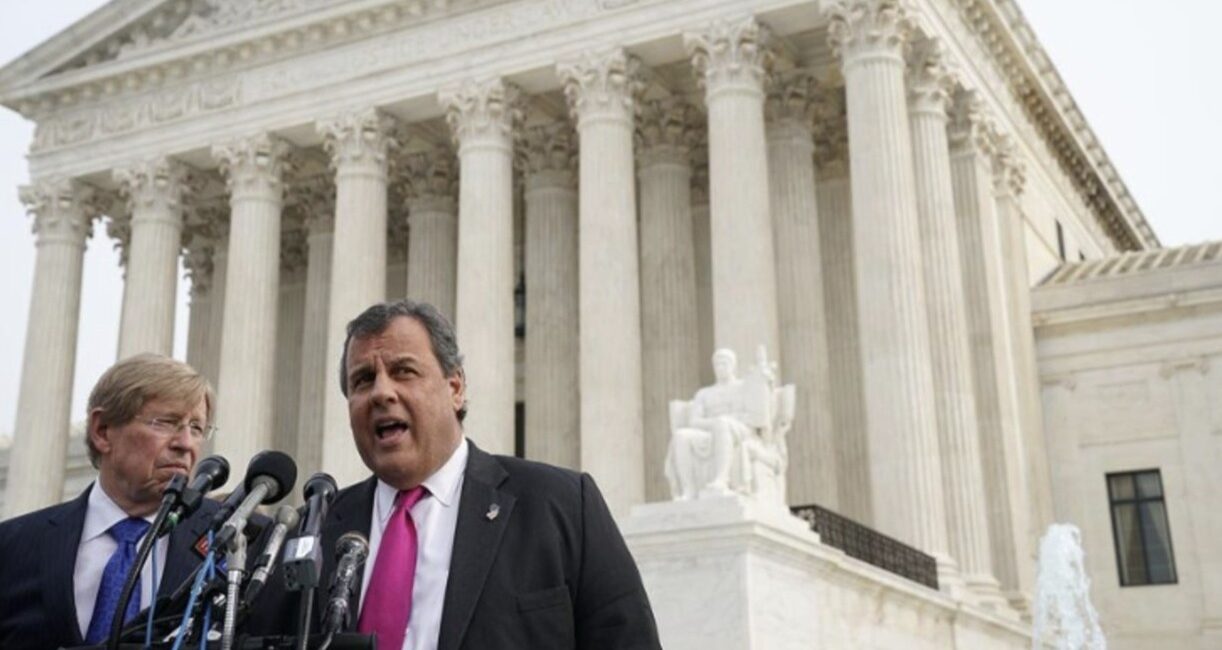
In 2017, Christie addressed reporters on the steps of the Supreme Court following oral arguments in the PASPA case. Christie spent more than six years arguing for the legalisation of sports betting on behalf of New Jersey, before the nation’s highest court struck down PASPA in May 2018. While the former governor believes the case on prediction markets will likewise eventually reach the court, he did not want to speculate on a potential time frame.
In Murphy vs NCAA (originally Christie vs NCAA), the court held that PASPA violated the anti-commandeering doctrine of the 10th Amendment, while ruling that Congress cannot command state legislatures to prohibit sports wagering. Supreme Court Justice John Roberts joined the majority in a 6-3 decision.
Christie told iGB that he believes the majority of the court has been “pro states’ rights”, adding that he thinks the justices will view the prediction markets case in a similar manner.
“I’m confident that the states are approaching this correctly from both a legal and a practical perspective,” Christie said. “How long it’ll take, I’m not exactly sure, but I do believe that the states will ultimately prevail.”

Matt Rybaltowski
Matt is primarily responsible for long-form feature coverage on complex sports betting scandals. He also provides coverage on finance, M&A and other technological developments.
More Information & Source
Original Source:
Visit Original Website
Read Full News:
Click Here to Read More
Have questions or feedback?
Contact Us

Other Articles

John Connelly Steps Down as Interblock CEO
Genius Sports agrees $1.2 billion deal to acquire Legend