
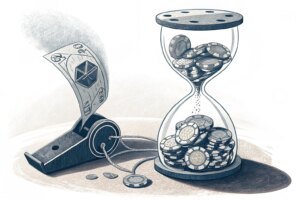
The ANJ’s move is one of the first attempts in Europe to regulate blockchain-based gaming mechanics.
France. The French gambling regulator, the Autorité Nationale des Jeux (ANJ), has rolled out a new framework to oversee games that feature monetisable digital objects. The move is one of the first attempts in Europe to regulate blockchain-based gaming mechanics.
The regime, known as Jeux à Objets Numériques Monétisables (JONUM), will operate as a three-year pilot programme. It applies to games that blur the line between traditional video gaming and regulated gambling, allowing players to acquire digital assets such as NFTs or blockchain-based items that can later be traded on secondary markets.
The system first outlined under the Security and Digital Space Regulation (SREN) Act, passed in May 2024, which established a distinct legal category for online games involving chance, financial stakes and resellable digital assets without payouts in legal tender. The framework has now gone live following the publication of implementing decrees.
JONUM titles are prohibited from offering cash prizes in the way licensed gambling products do. The framework also introduces limits on reward distribution, including caps on the total value of digital assets that a single player can accumulate over time.
Minors are prohibited from participation in JONUM-regulated games. Operators must verify players’ age and identity when they create an account. They must also implement responsible gambling tools, including play-time and spending limits as well as self-exclusion features.
Any operator wishing to launch JONUM products in France must file a declaration with the ANJ and keep up detailed reporting. This will include activity logs and, where blockchain or wallets are used, providing regulator access to track flows for anti-money laundering and compliance oversight.
The move makes France one of the first jurisdictions to introduce a tailored regulatory framework for monetisable digital object games rather than relying on legacy gambling laws or allowing self-regulation. While Belgium has banned loot boxes, deeming them to classify as gambling, the UK concluded that loot boxes fall outside the scope of the Gambling Act 2005 and opted to encourage industry regulation as agreed by Ukie.
Polish lawmakers are considering an draft amendment to Poland’s Gambling Act that would create a new legal category of games with virtual goods that would see in-game purchases with randomly awarded prizes treated as gambling. Again, loot boxes would be restricted to over 18s, and companies offering the mechanics would need a licence.

More Information & Source
Original Source:
Visit Original Website
Read Full News:
Click Here to Read More
Have questions or feedback?
Contact Us

Other Articles

Key iGaming Trends to Watch This March
Wisconsin online sports betting bill beats closing deadline

No Comment! Be the first one.