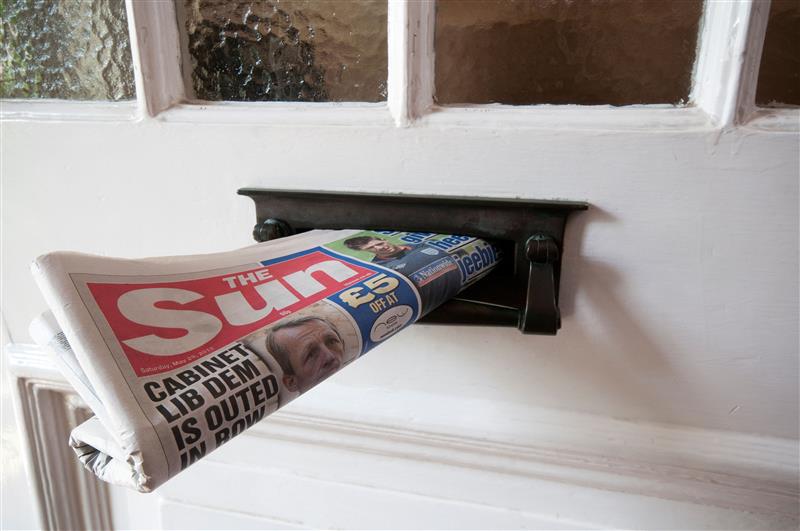
The Sun’s “Save Our Bets” campaign has supercharged the nation’s debate over gambling tax – but is this about levies or national identity? And who wins if this voice gets louder?
When British political drama enters the bloodstream of mass culture, it often arrives with a tabloid headline. And so it is with The Sun’s ‘Save Our Bets’ campaign – a blistering media intervention that has hauled the proposed gambling tax hike in the upcoming budget by the UK’s Labour government out of the spreadsheets of treasury analysts and into betting shops, racecourses, seaside piers and discussions around dinner tables in British homes.
The campaign is crammed with evocative imagery: coin-pushers on sea promenades, bookies wedged between the chip shop and the newsagent, fruit machines with glowing buttons that evoke the warm memory of holidays. The Sun’s 8.7 million daily readers are told this is not actually about taxation, but an attack on “our way of life”.
It is safe to say that what began as a technical fiscal recalibration has become a noisy public brawl about British culture, high-street decline and, not least, the right to personal choice and a harmless flutter.
As Matt Chapman, The Sun’s racing columnist, writes: “By slamming the betting industry government will indirectly be telling you how you can – or in this case can’t – spend your money.”
Farage enters culture war
For a long time, arguments over gambling regulations and taxation have been contained among think-tanks, industry consultants and the occasional treasury committee hearing. But now the Labour government’s plan to overhaul gambling duties and increase taxes on remote gambling duties – with proposals reaching as high as 50% of gross gaming revenue (GGR) – is drawing strong reactions.
Part harm-reduction exercise, part revenue-raising manoeuvre has collided with national nostalgia and The Sun, never shy about riding a political wave – as seen in its successful pro-Brexit campaigning in the run-up to the 2016 referendum – is very much pushing the debate.
Protecting high-street livelihoods
The newspaper has said its campaign is a defence of punters and high-street livelihoods. This is an argument in line with that of gambling industry bodies such as the Betting and Gaming Council (BGC) who have warned of job losses of up to 40,000 and a £3 billion blow to the economy if the proposed tax hikes come into force. The sector has also been extremely vocal about high-street bookmakers facing an existential threat if a higher Remote Gaming Duty is enforced.
The Sun’s ‘Save our Bets’ activism has immediately attracted support from the right of the political spectrum, most notably from Nigel Farage, whose Reform UK party is currently the most popular party in the UK. More than a third of voters have said they would vote Reform UK if there were elections today, according to polling data.
Farage’s constituency of Clacton-on-Sea in Essex is a seaside town that very much thrives on summer tourism – ripe with bingo halls, slot machines and gambling opportunities that play an integral part of the town’s entertainment offerings. Farage has called Labour’s tax plans an assault on British culture. He believes a betting tax hike will do nothing to help problem gamblers.
Leader of the Conservative Party Kemi Badenoch has also spoken out against Chancellor Rachel Reeves’ plans designed to help fill a financial black hole. Badenoch accuses Labour’s “fun police” of taking a “nanny state approach” to betting, which she said could kill off the industry.
Interested in the UK gambling tax hike debate?
One day after the UK budget announcement, iGB is hosting a webinar where experts will examine the Chancellor’s decision on gambling taxes — and evaluate the potential fallout for the industry. Sign up for a reminder to tune in on November 27th at 2pm BST.
Sun’s campaign evokes mixed feelings
But the campaign has not been received entirely well by some within the gambling industry. “I’m uneasy about how the debate has been positioned,” says Dan Waugh of Regulus Partners, one of the sector’s most respected analysts. “This childish idea that gambling is a battle between good and evil has taken hold.”
But Farage’s involvement, he concedes, is legitimate – he leads the most popular party in the polls after all. And as Waugh points out: “The Liberal Democrats and the Greens, for example, have developed positions that are explicitly anti-gambling. It would be worrying if none of the political parties were prepared to stand up for people who enjoy betting, bingo and horse racing.”
Waugh does not approve of the spectacle into which policy has been conscripted. “The issues are complex,” he says. “We’re not helped by the noise.” With The Sun’s campaign and the public debate growing louder, the situation could perhaps offer a chance to improve transparency and push for more evidence-based policy. It may also give the gambling industry an opening to publicly challenge the government’s tax proposals.
Operator support for Sun’s ‘Save our Bets’
Neal Luke, a gambling compliance consultant, says the issue is twofold. While the Gambling Commission is investing heavily in data and research, most people will never read it. What matters is how that information shapes regulation – and how clearly the public can understand what’s been considered.
“The public will only see headlines. It’s about making sure they know what’s been considered, in plain English, from a neutral place – not a political one.” Asked what a neutral source would look like, Luke argues that today’s opinions are shaped by short-form online content, making balanced communication more important than ever.
Among operators there is a positive acceptance of The Sun’s war on the government’s plans and of Nigel Farage’s outbursts. For Betfred’s Head of Communications Mark Pearson, the message should be about one thing only.
“For me this is not about media framing but getting the message across that the country’s betting shops are already in a very, very fragile position. Any hit on the high street is going to close betting shops with job losses and less money going to racing and the treasury. Once betting shops close, they are not coming back,” Pearson says.
A spokesperson for Flutter UK&I also backs the media campaign. Putting taxes up for any business is not a free hit; it has consequences, he stresses. “It’s great to see The Sun’s ‘Save Our Bets’ campaign as it gives a voice to the customer – and customers have been overlooked in the debate driven by anti-gambling groups so far this year.”
Think tanks push back industry claims
The “anti-gambling groups” that Flutter UK&I refers to are primarily the think tanks The Institute for Public Policy Research (IPPR) and Social Market Foundation. Both are pushing hard for a higher gambling tax. And both are heavily supported by several influential political voices, such as former Labour prime minister and chancellor Gordon Brown, who believes that the tax hike could help end child poverty in the UK, making the tax hike not merely a regulatory tool but a moral undertaking.
“We tax cigarettes at 80%, we tax alcohol at 70%, but the online gambling tax is 21%. So there’s a big case for change. I think the gambling companies could well afford to pay a tax – and I want that money to go to child poverty,” he told Sky News.
Dan Waugh of Regulus Partners worries that the entire debate, including the industry’s approach, has lost its anchor in evidence. And, in the end, a campaign led by a tabloid newspaper may not make things clearer. “Public debate is chaotic,” he says. “Statistics are misused across the board.”
The most talked-about levy
Grainne Hurst, the BGC’s CEO, attended the Reform UK conference earlier this year and was photographed alongside Farage, who in spite of popularity remains a divisive political figure.
“It was a pleasure to lead the Betting and Gaming Council team at the Reform UK Conference this week. We had constructive discussions with senior figures in the party about the importance of a strong, sustainable and well-regulated betting and gaming sector,” Hurst wrote in a post on her LinkedIn page.
Explaining the reason for her presence she added: “I will always stand up for our industry – one that supports 109,000 jobs, generates £6.8 billion for the economy, contributes £4 billion in tax and serves the millions of people who enjoy a bet responsibly.”
‘Necessary lobbying’ for the sector
Waugh sees Grainne Hurst’s presence at Reform UK´s conference as a necessary part of the trade body’s lobbying efforts. “Operators should engage with a wide range of stakeholders, in my view. If anything, the industry has been far too passive in recent years in the face of an orchestrated campaign to close it down.”
Others, who prefer not to speak on record, are less cheerful, noting that any perception of ideological capture could backfire while Labour is weighing its final tax design. What happens next will depend on whether Chancellor Rachel Reeves allows public clamour to overshadow the data on her desk.
The government knows the gambling sector billions in tax revenue; it also knows online gambling has grown rapidly and that harms persist. It must weigh those realities against the possibility of shuttered shops, reduced racing revenue and a migration to offshore operators.
For now, the noise grows as The Sun has succeeded in making gambling tax the most talked-about levy in Britain. Whether this results in better policy in the eyes of the industry – or simply more polarisation – remains to be seen.
More Information & Source
Original Source:
Visit Original Website
Read Full News:
Click Here to Read More
Have questions or feedback?
Contact Us

Other Articles

Cohen’s Queens Casino Bid Moves Forward After USTA Dispute